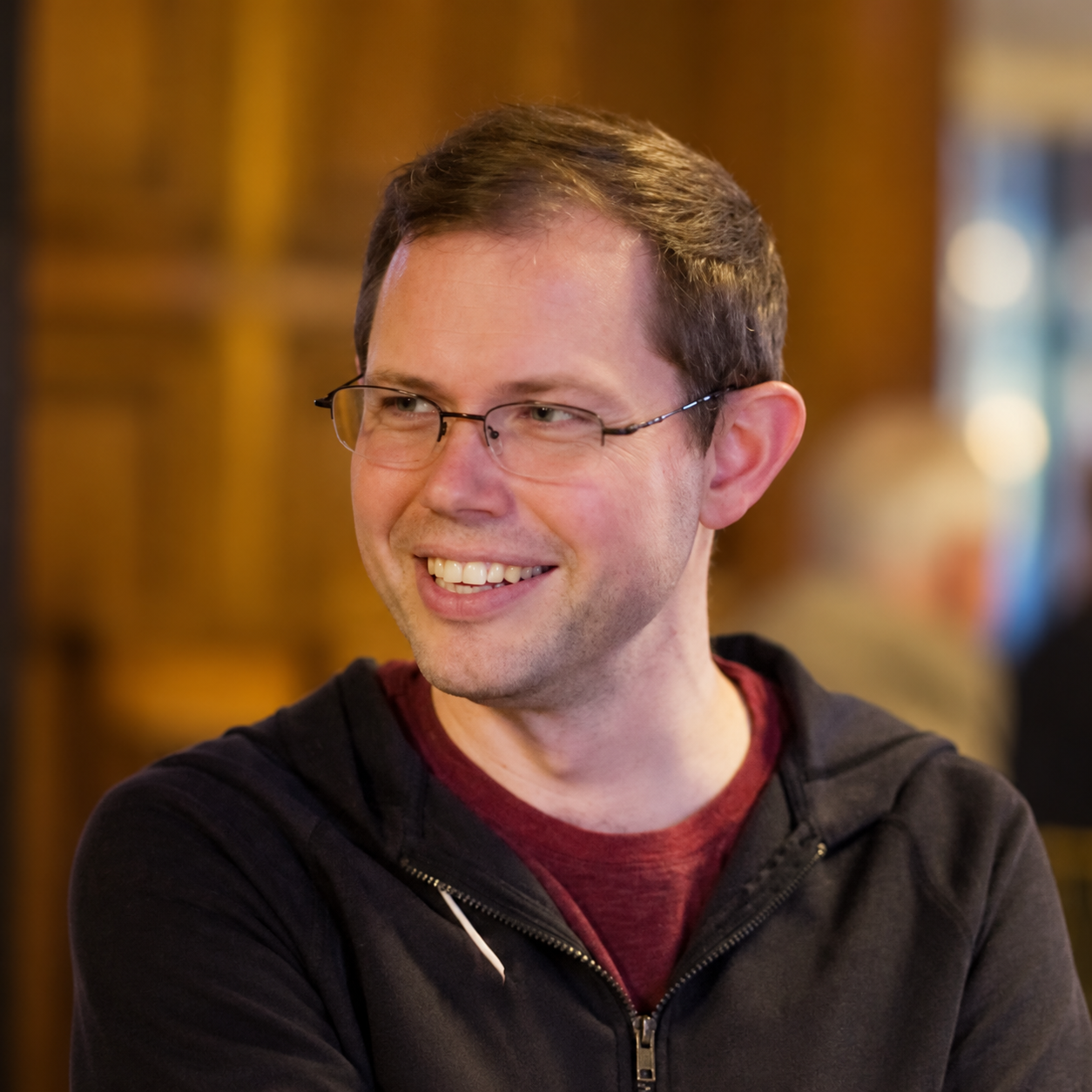
Prof. Brett A. McGuire
Associate Professor of Chemistry
brettmc@mit.eduFull profile
Associate Professor of Chemistry
brettmc@mit.eduFull profile
Research Scientist
gwenzel@mit.eduFull profile
Postdoctoral Researcher (2026–present)
lxbyrne@mit.eduFull profile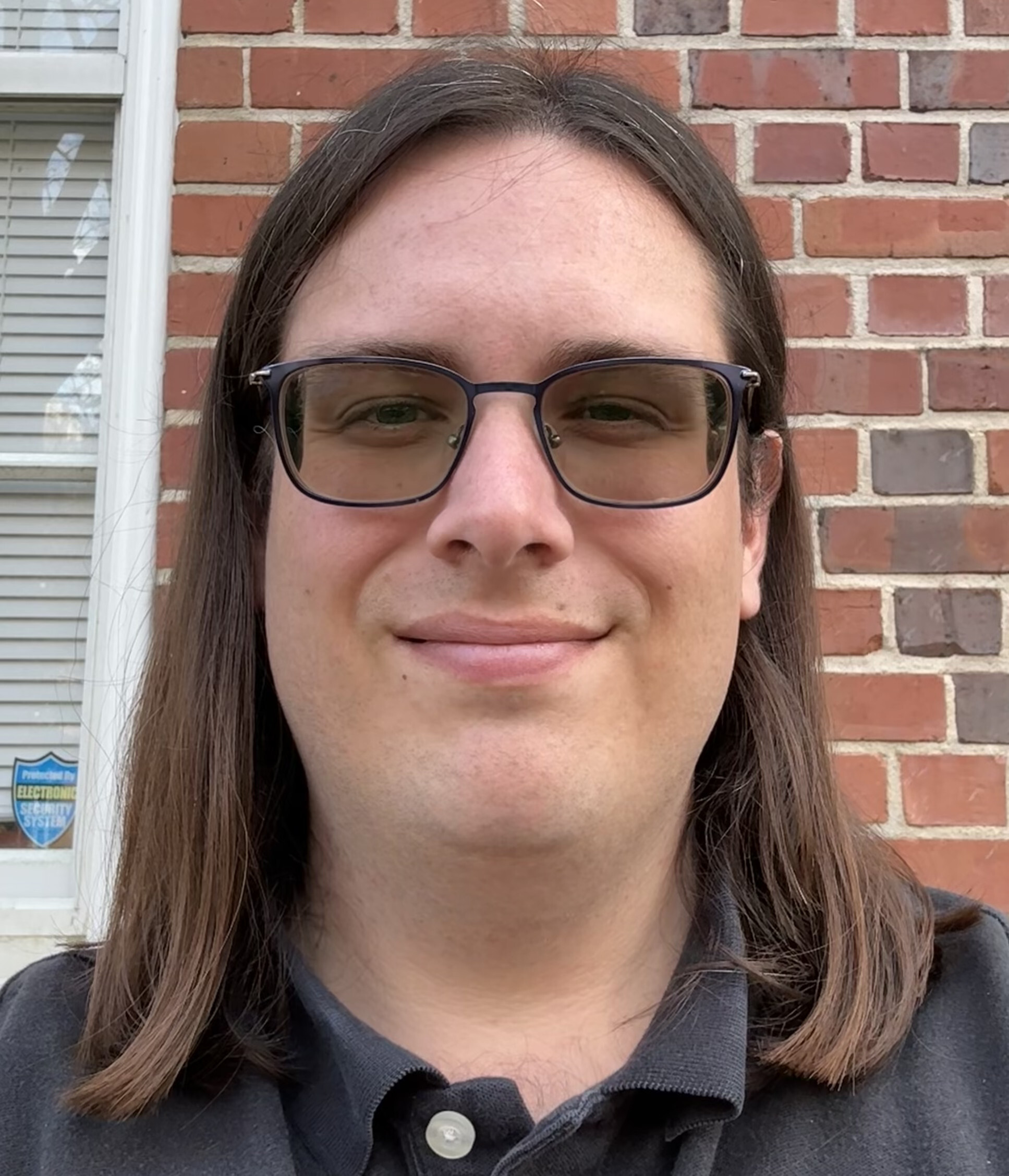
Postdoctoral Researcher
ghjones@mit.eduFull profile
Graduate Student
archie25@mit.eduFull profile
Graduate Student
mfduffy@mit.eduFull profile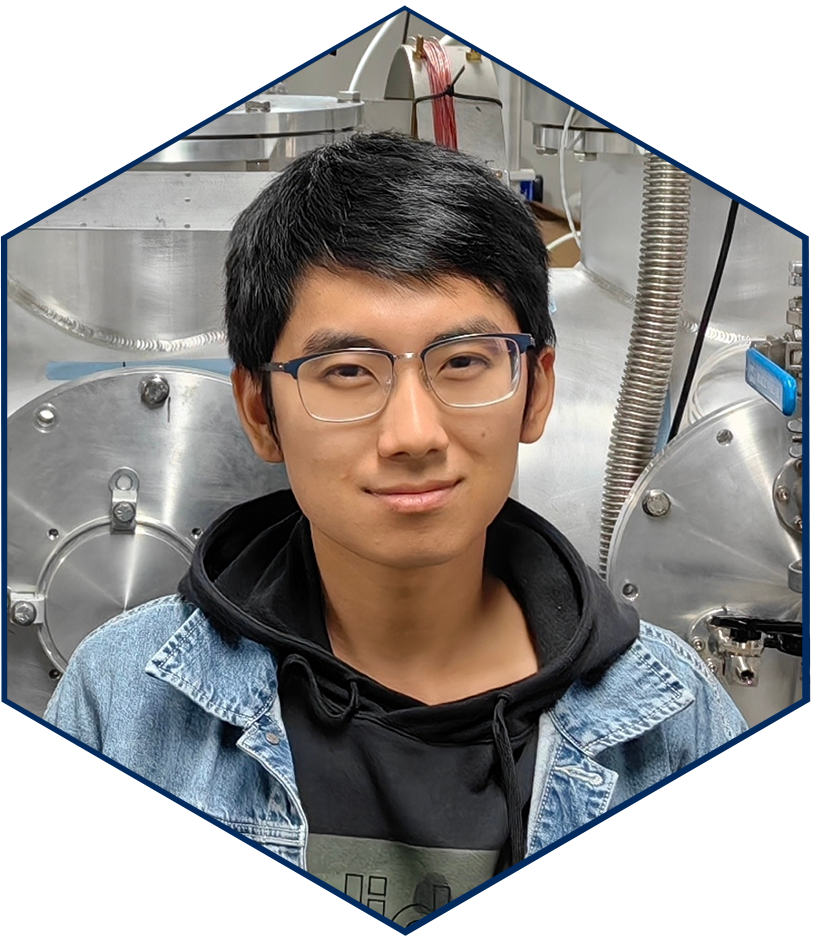
Graduate Student
hyren@mit.eduFull profile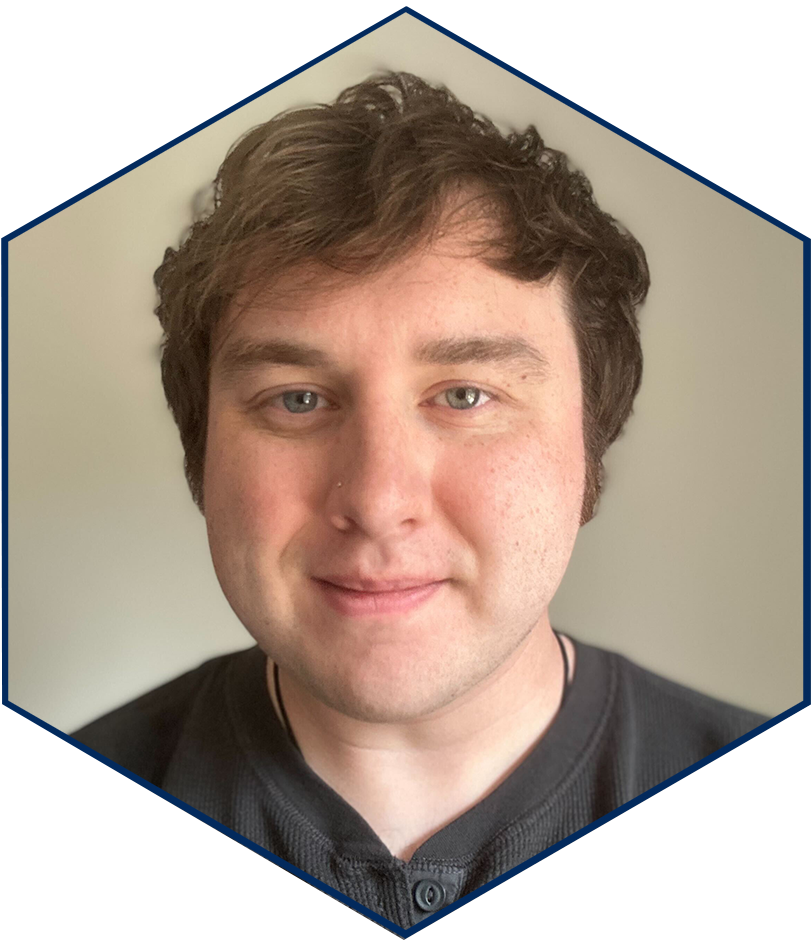
Graduate Student
zpburke2@mit.eduFull profile
Undergraduate Researcher
chidester.n@northeastern.eduFull profile
Undergraduate Researcher
stori@mit.eduFull profile
Former Postdoctoral Researcher
ankobuv@sandia.govFull profile
Former Graduate Student (2021–2026)
Full profile
Former Postdoctoral Associate (2023–2026)
Full profile
Former Senior Postdoctoral Fellow (2020–2021)
Full profile
Former Postdoctoral Fellow (2020–2021)
Full profile
Former Postdoctoral Associate (2023–2025)
Full profile
Former Postdoctoral Fellow (2021–2025)
Full profile
Former Graduate Student (2021–2025)
Full profile
Former Graduate Student (2022–2024)
Full profileI’m a Northeastern undergraduate majoring in chemistry and minoring in astrophysics (Class of 2027), and I’m interested in using experimental physical chemistry to help explore the evolution of chemical complexity across the cosmos. My work has focused on broadband rotational spectroscopy of spectrally complex, astrochemically relevant molecules in the lab and searching for them in molecular clouds. I also have experience with UHV ice-phase formation experiments and astrophysical studies of intracluster dust in merging galaxy clusters. After graduating, I hope to continue building on this work in graduate school!
I'm an MIT undergraduate majoring in chemistry (Class of 2028), and I combine broadband rotational spectroscopy with quantum chemical calculations to characterize astrochemically relevant molecules. I'm especially drawn to semi-experimental equilibrium structure calculations, where experimental rotational constants and computed vibrational corrections provide precise molecular geometries. I also have experience with fitting rotational spectra of ground and vibrationally excited states, as well as computationally studying electronically excited states of polycyclic aromatic hydrocarbons. I love physical chemistry and am excited to continue using spectroscopy to understand the world around us!
Current position: Postdoctoral Researcher, Combustion Research Facility, Sandia National Laboratories
EducationI am an experimental physical chemist by training. I completed my Ph.D at Stony Brook University, New York where I investigated the bonding motifs in sub-3 nm atmospheric particles using gas phase, mass-selective infrared spectroscopy and quantum chemical calculations. After that, in the McGuire group, I contributed to several research threads including the development of a new instrument to study exoplanetary atmospheric reactions in the lab, applied stacking and matched filtering analysis to quantify astronomical PAH non-detections, and explored the use of machine learning models for tracking astrochemical relevant reaction networks. Currently, I am postdoctoral researcher in the Combustion Research Facility at Sandia National Laboratories, where I probe atmospherically relevant species with chirped-pulse Fourier transform microwave spectroscopy. Overall, I am motivated to keep working across the electromagnetic spectrum on the chemistry of atmospheres, both on Earth and beyond.
I am an astrochemist: I study molecules in space, how they formed, and what happens to them as stars and planets take shape. My group combines laboratory rotational spectroscopy, radio astronomy, chemical kinetics modeling, and machine learning to connect the molecules we detect with the chemistry that made them.
A major focus is the chemistry of polycyclic aromatic hydrocarbons (PAHs). Identifying individual PAHs lets us ask which molecular structures are favored, how they grow or break apart, and whether they form in cold clouds or survive from earlier stages of the interstellar carbon cycle. We use laboratory measurements, astronomical detections and upper limits, and chemical models to test those possibilities.
An experimental physicist by training, I did my Ph.D. at IRAP, the Institute for Astrophysics and Planetology Research in Toulouse, France. Here, I investigated the interaction of cosmic polycyclic aromatic hydrocarbons (PAHs) with ultraviolet and infrared light in the astrophysics laboratory and explored various relaxation processes of these energized molecules in the gas-phase. After graduating in 2020, I moved to Aarhus, Denmark, to use my surface science background from my B.Sc. and M.Sc. to examine functionalized PAHs on astrochemically relevant surfaces and in ices. With the first unambiguous detections of PAHs in the interstellar medium, I changed gears again and joined the McGuire lab in October 2022. Here, I built our compact chamber chirped-pulse Fourier transform microwave (CP-FTMW) spectrometer, Tweety. This new instrument currently enables us to perform broadband rotational spectroscopy and collects data on species of astrochemical interest. I also hold a visiting scientist appointment with our collaborating group at the Center for Astrophysics (CfA) | Harvard & Smithsonian in the McCarthy group, where I use high-resolution cavity-enhanced FTMW spectroscopy to complement our broadband measurements. Overall, I am excited to keep contributing to the efforts of detecting molecules and in particular PAHs in space!
I am a quantum chemist interested in the spectroscopy and kinetics of molecules in the gas-phase. My work encompasses both the application of existing methods to experimental problems, as well as development and implementation of new methods, especially open-shell coupled cluster theory in the CFOUR program suite. Inspired by a half-experimental Ph.D., I place particular emphasis on developing methods that are directly comparable to laboratory data, which places significant demands on both consistency and quantitative accuracy (i.e. being right for the right reasons).
In the McGuire group, I also help develop molsim, our group’s software tool used to simulate astronomical observations of rotational spectra from fitted laboratory data.
Next destination: Rowan Scientific
EducationNext destination: Communications and Power Industries
EducationI’d describe myself as a spectroscopist, yet I aspire to become an astrochemist and astrobiologist! During my graduate research at UVA, I worked on the development of analytical strategies using rotational spectroscopy for impurity analysis, chiral analysis, and isotopic isomer analysis with applications to pharmaceutical manufacturing, environmental sciences, and astrochemistry. I’m very interested in better understanding chiral interactions and isotopic patterns, which have both been at the center of my past research composed of several collaborations with synthetic chemistry research groups as well as NASA’s Jet Propulsion Laboratory. In the latter, I spent time designing, building, and testing a spectrometer using the three-wave mixing rotational spectroscopy technique to detect and quantify chiral species related to homochirality as a measurable biomarker in the search for life in our solar system. I hope to continue honing my skills in the McGuire group and be a part of the laboratory side of the detection of new molecules in space while also forming collaborations to use rotational spectroscopy as a robust characterization and analytical method for astrobiology applications in the search for life under the ice of Mars, in the skies of Venus, or deep in the oceans of the moons of Jupiter and Saturn.
Next destination: NVIDIA
I received my PhD in 2017 from the University of New South Wales, where I studied the photodissociation dynamics and spectroscopy of atmospheric molecules using tunable lasers and velocity-mapped ion imaging. My first postdoctoral appointment was at the Center for Astrophysics | Harvard & Smithsonian, where I was steadily introduced to the world of rotational spectroscopy and molecular astrophysics. While I am a trained experimentalist, I also consider myself a theoretical hobbyist: I take a significant amount of interest in computation, ranging from electronic structure theory to data science to deep learning and automation. Appropriately, I am constantly thinking about how I can replace myself with a Raspberry Pi.
Next destination: Assistant Professor of Chemistry, Union College
EducationMy graduate work at MIT was focused on the spectroscopy and dynamics of high angular momentum Rydberg states of atoms and molecules. These special electronic states possess exaggerated properties that make them useful for diverse scientific applications from quantum computing to studying reaction dynamics. Using tunable lasers and chirped-pulse millimeter-wave spectroscopy, I demonstrated a new coherent population transfer technique and developed detailed models of the dynamics and spectroscopy of Rydberg states of the prototypical molecule, nitric oxide. In the McGuire lab, I am applying chirped-pulse millimeter-wave spectroscopy to new problems --- investigating small molecules of relevance to the chemistry of circumstellar envelopes. In addition, I am enthusiastic about involving undergraduates in research projects and contributing to chemistry education at all levels.
Next destination: Pendar Technologies
EducationI am a spectroscopist with a keen interest in astrochemical applications. During my Bachelor's and master’s programs at the Indian Institute of Science (IISc), I conducted chemical kinetics studies using shock-tube experiments. My passion for theoretical analysis led me to explore quantum chemical topological studies on shock-processed materials. For my Ph.D., I joined the FELIX Laboratory in the Netherlands, where I specialized in cryogenic ion trap spectroscopic experiments. Utilizing a free-electron laser, I performed vibrational studies on molecular ions and contributed to developing methods for a rotational action spectroscopic technique for molecular ion. My overarching interest lies in employing spectroscopic tools to elucidate the chemistry of the interstellar medium. Beyond experimental studies, I have developed a strong enthusiasm for creating software tools for spectroscopic data analysis and integrating machine learning and deep learning techniques in astrochemistry. Towards the end of my Ph.D., I decided to pursue my passion for software development in spectroscopy and astrochemistry. In October 2023, I joined the McGuire Group as a postdoctoral associate to spearhead the development of automated software tools for spectroscopy. My role involves expanding the use of machine learning, developing new applications, and building a software platform to integrate these approaches with other automation and analysis tools.
Next destination: National Radio Astronomy Observatory
EducationI received my Ph.D. in 2021 from the University of Virginia and had been a Grote Reber doctoral fellow associated with the National Radio Astronomy Observatory. Leveraging both radio astronomical observations and astrochemical modeling, my graduate research focused on exploring the spatial distribution and evolution of the complex astronomical molecules toward varieties of interstellar molecular clouds. Starting January 2022, I have begun my first postdoctoral appointment with the McGuire lab, working on the exploration of astrochemical modeling of polycyclic aromatic chemistry under dark cloud conditions. I am particularly enchanted with Japanese food and traveling around Japan
Next destination: Flagship Pioneering
Education