Gabi Receives AAS LAD Early Career Award!
The LAD Early Career Award is given to an individual who has made significant contributions to the field within 10 years of receiving their PhD. The award recognizes Gabi's transformative discoveries of polycyclic aromatic hydrocarbon molecules (PAHs) in the interstellar medium through high-resolution microwave spectroscopy and radioastronomical observations. Congratulations Gabi!
GOTHAM Team Shares Largest Public Molecular Survey To-Date
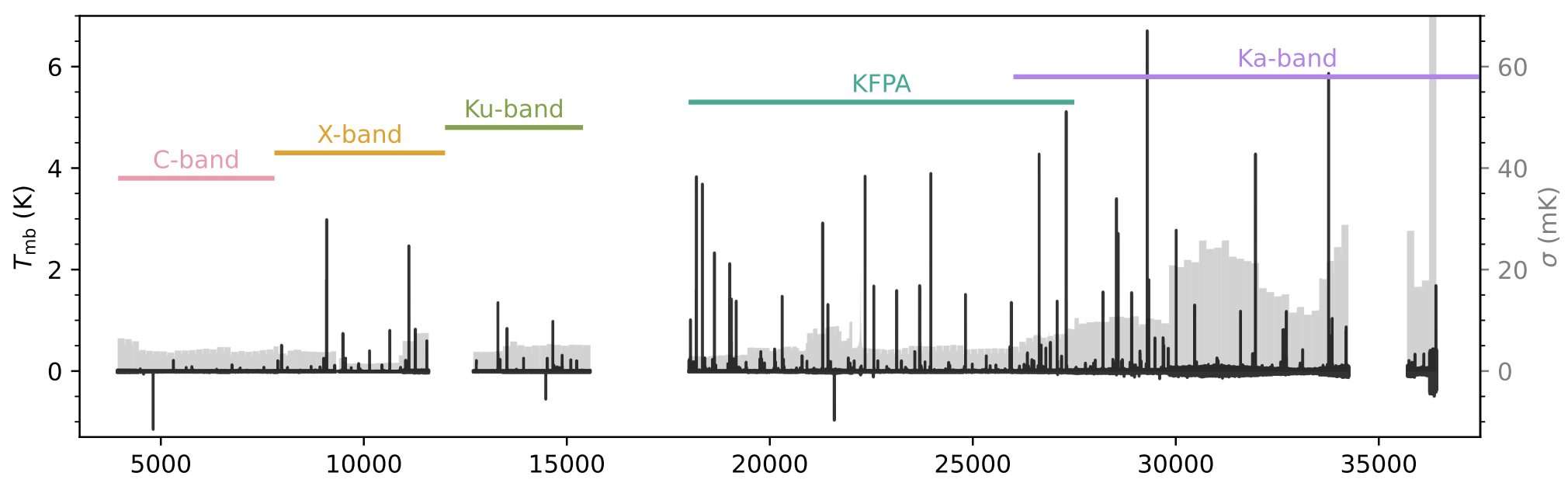
After more than 1,400 hours of observations with the Green Bank Telescope, the GOTHAM team has released the largest public dataset of interstellar molecular spectra ever collected from the TMC-1 cloud, revealing over 100 interstellar molecules, including numerous complex aromatic species.
McGuire Group Detects Cyanocoronene in Space
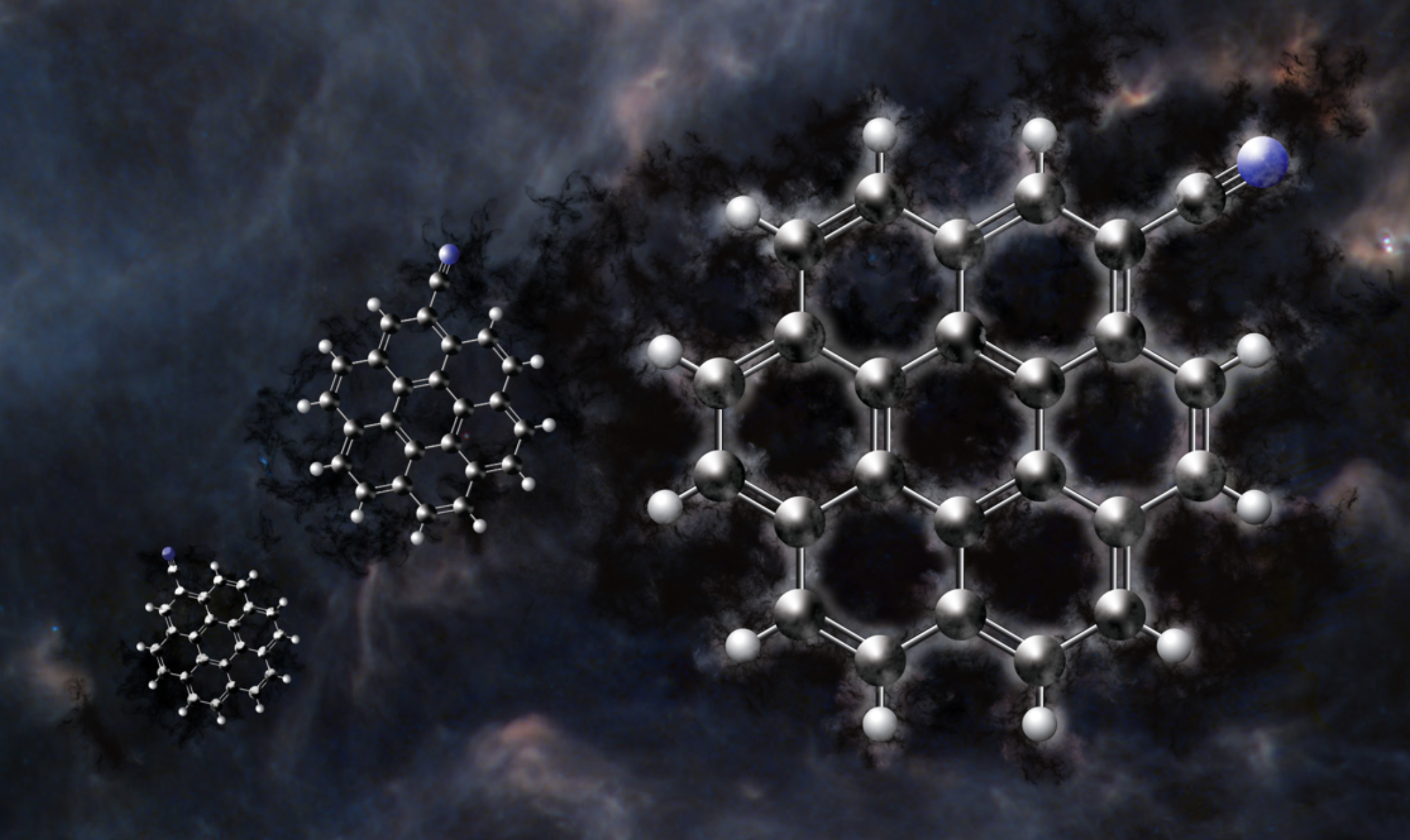
Cyanocoronene, a seven-ring polycyclic aromatic hydrocarbon, was detected in TMC-1 by the GOTHAM Collaboration in a study led by Gabi Wenzel. It is currently the largest interstellar molecule discovered through radio astronomy!
Hannah Sucessfully Defends her Ph.D. Thesis!
Congratulations to Hannah for successfully defending her dissertation!
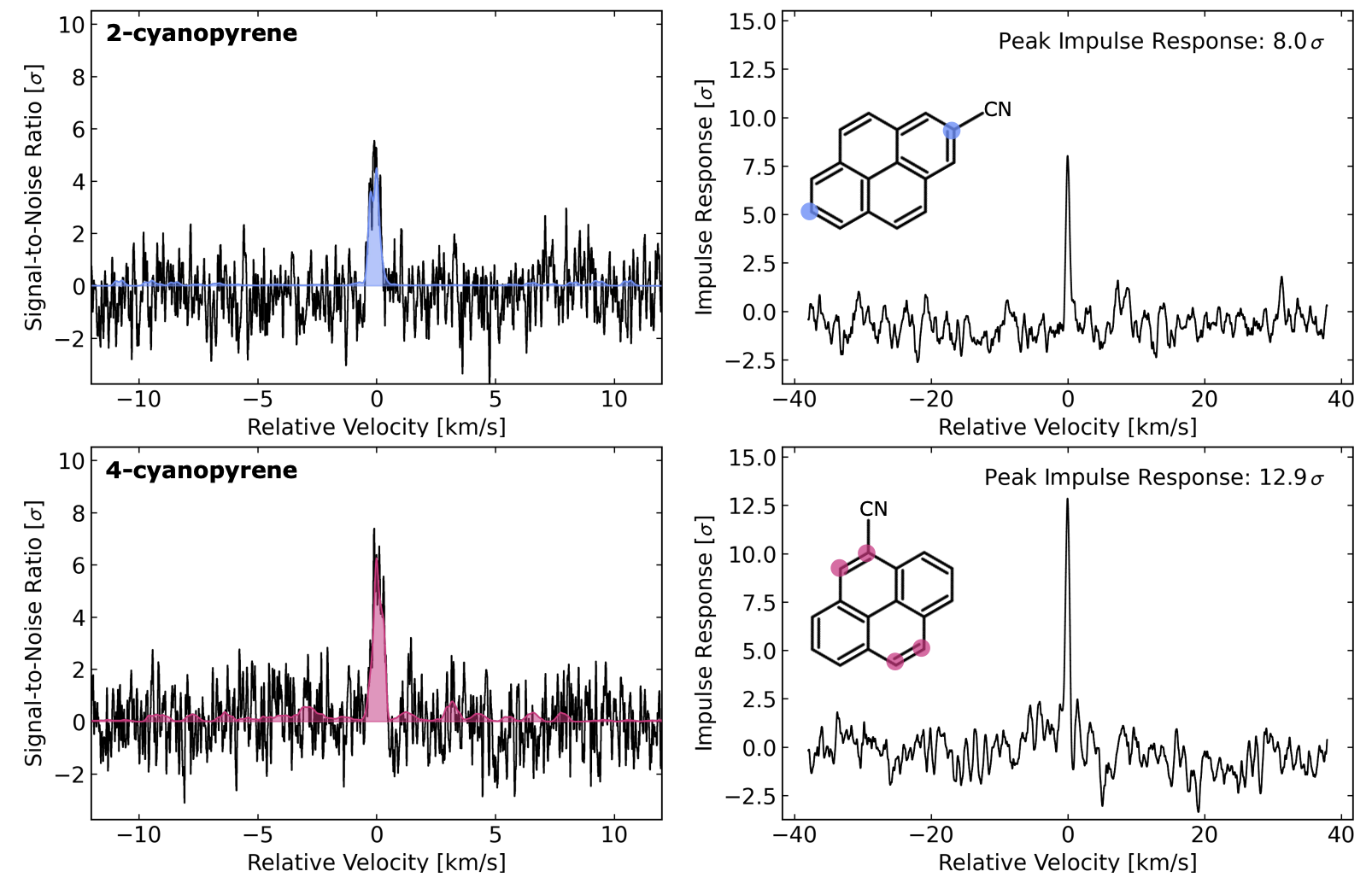
McGuire Group Detects New Polycyclic Aromatic Hydrocarbon in Space
In a study led by Gabi Wenzel, the GOTHAM Collaboration detected several isomers of cyanopyrene (a four ring polycyclic aromatic hydrocarbon) in TMC-1.
Zach Fried Receives 2024 International Symposium on Molecular Spectroscopy Rao Prize
This prize is awarded for a graduate student presentation at the International Symposium on Molecular Spectroscopy hosted at the University of Illinois Urbana-Champaign. Zach received this award for his talk on the recent interstellar detection of 2-methoxyethanol. Congratulations, Zach!
Marty Receives MIT Chemistry Mentorship Spotlight Award
This award recognizes individuals who demonstrate exceptional commitment to fostering a positive working environment for those around them, leading by example, and generally demonstrating outstanding mentorship. Congratulations, Marty!
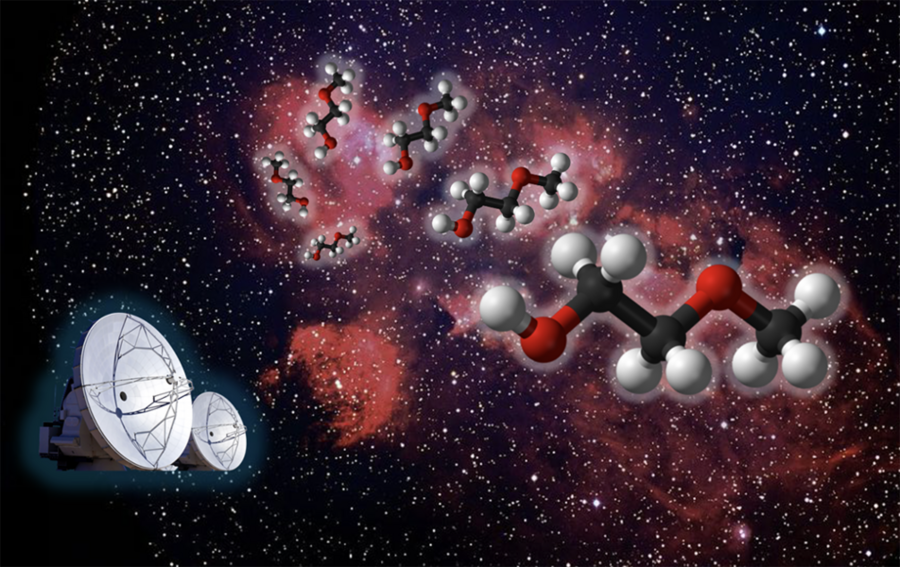
McGuire Group Detects New Molecule in Space
Alongside a global collaboration, members of the McGuire group worked to measure and analyze the rotational spectrum of 2-methoxyethanol (CH3OCH2CH2OH). This new data ultimately resulted in the first interstellar detection of the molecule toward the star-forming region NGC 6334I.

Gabi Receives MIT School of Science Infinite Expansion Award
The recipients of the Infinite Expansion Award are recognized not only for their exceptional science, but for mentoring and advising junior colleagues, supporting educational programs, working with the MIT Postdoctoral Association, or contributing some other way to the Institute. Congratulations, Gabi!
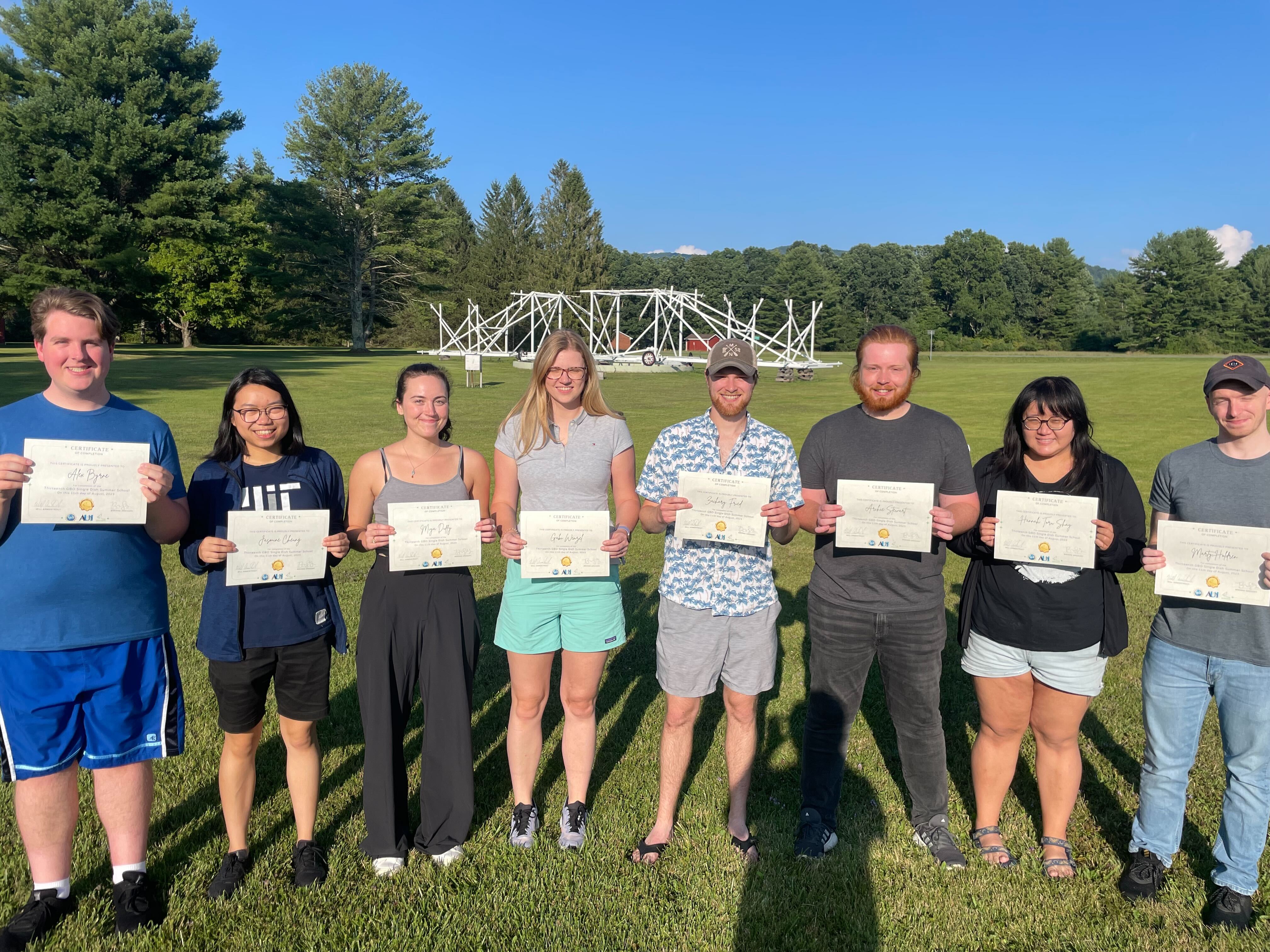
McGuire Group Attends the Green Bank Single Dish Summer School and GBT Training Workshop
Alex, Jasmine, Miya, Gabi, Zach, Archie, Hannah, and Marty traveled to Green Bank, West Virginia from August 7-14 for the 2023 Single Dish Summer School and GBT Training Workshop. This summer school provides students, post-docs, and experts in other fields of astronomy with both knowledge and practical experience of the techniques and applications of single-dish radio astronomy. The workshops are based around an intensive series of lectures from experts, as well as hands-on radio-astronomy projects and tutorials.
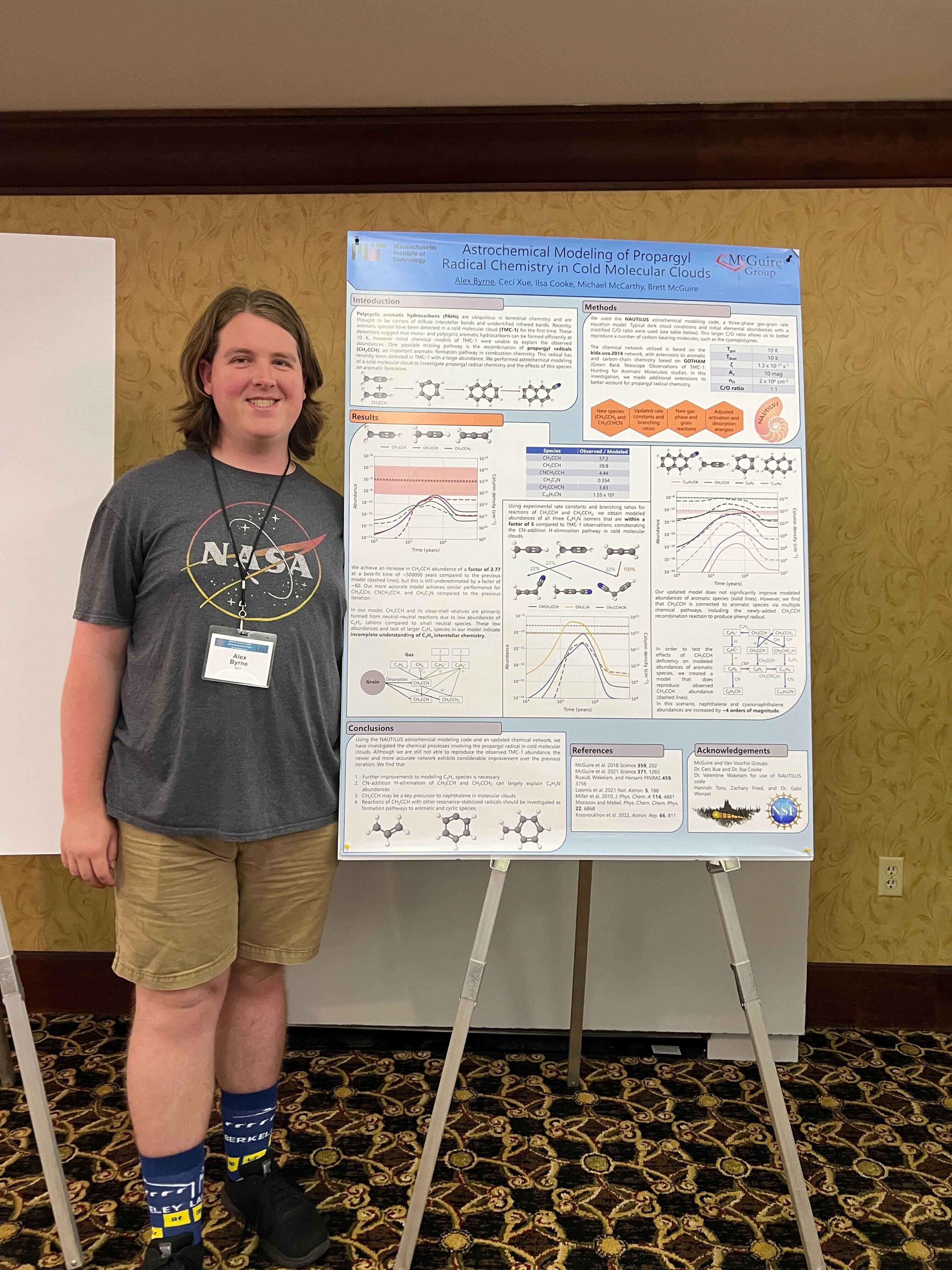
McGuire Group Attends the Kavli-IAU Astrochemistry Symposium
The entire group attended the Kavli-IAU Astrochemistry Symposium in Traverse City, Michigan from July 10-14, 2023. Brett gave a talk regarding the development of molecular complexity in the interstellar medium. Alex, Hannah, Zach, and Gabi also presented posters.
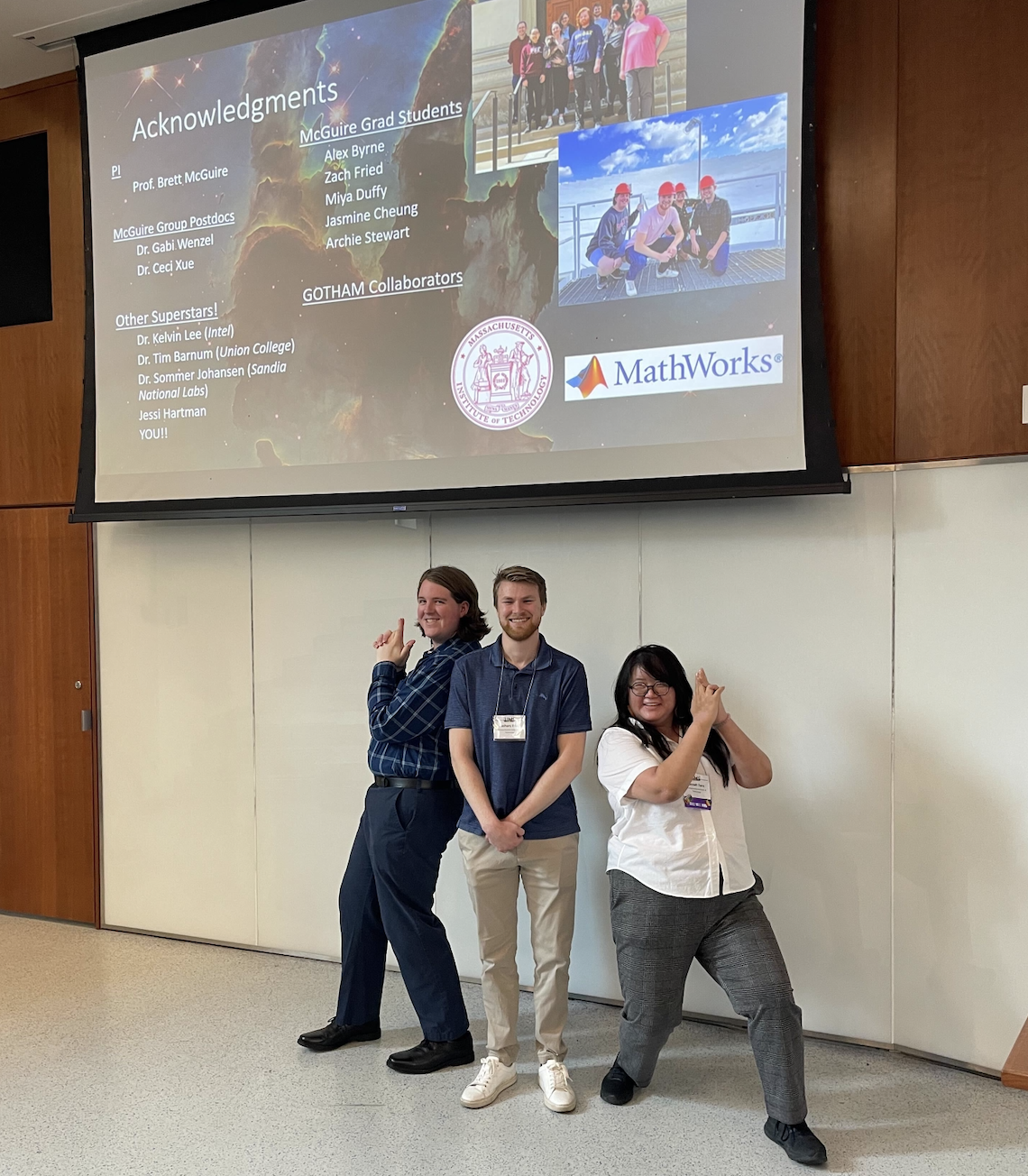
McGuire Group Attends the 2023 International Symposium on Molecular Spectroscopy
The entire group attended the 2023 International Symposium on Molecular Spectroscopy (ISMS) at the University of Illinois Urbana-Champaign. Gabi, Hannah, Alex, Zach, and Ceci all gave research talks.
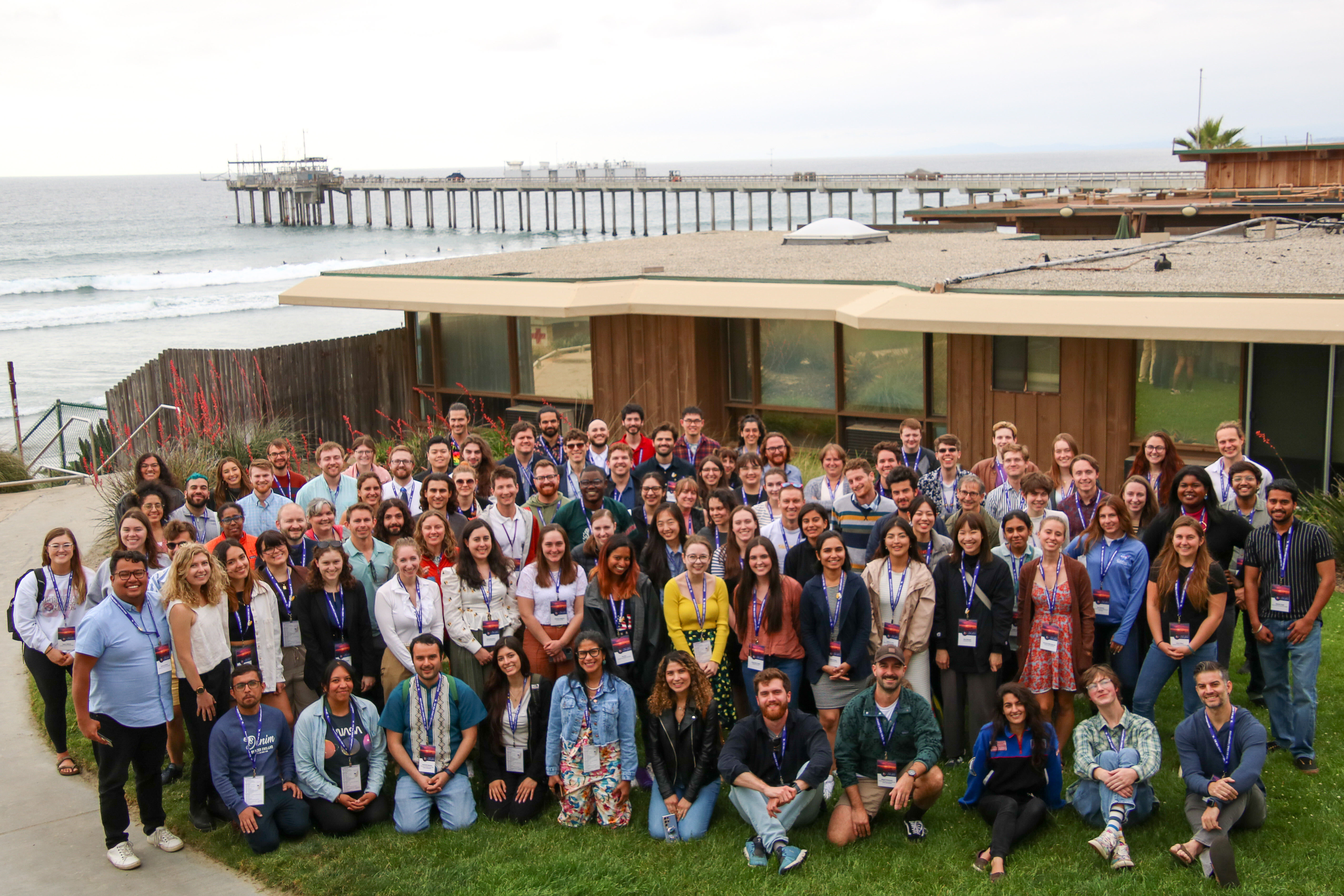
Zach Presents at AbGradCon 2023
Zach attended the 2023 Astrobiology Graduate Conference (AbGradCon) in La Jolla, California from May 22-25. He presented his research regarding the use of machine learning regressors to model the chemical abundances and isotopic ratios of the molecules in the protostar IRAS 16293-2422B.
Alex is Awarded NSF GRFP Fellowship
The NSF Graduate Research Fellowship Program (GRFP) recognizes and supports outstanding graduate students who have demonstrated the potential to be high achieving scientists and engineers, early in their careers. Congratulations, Alex!
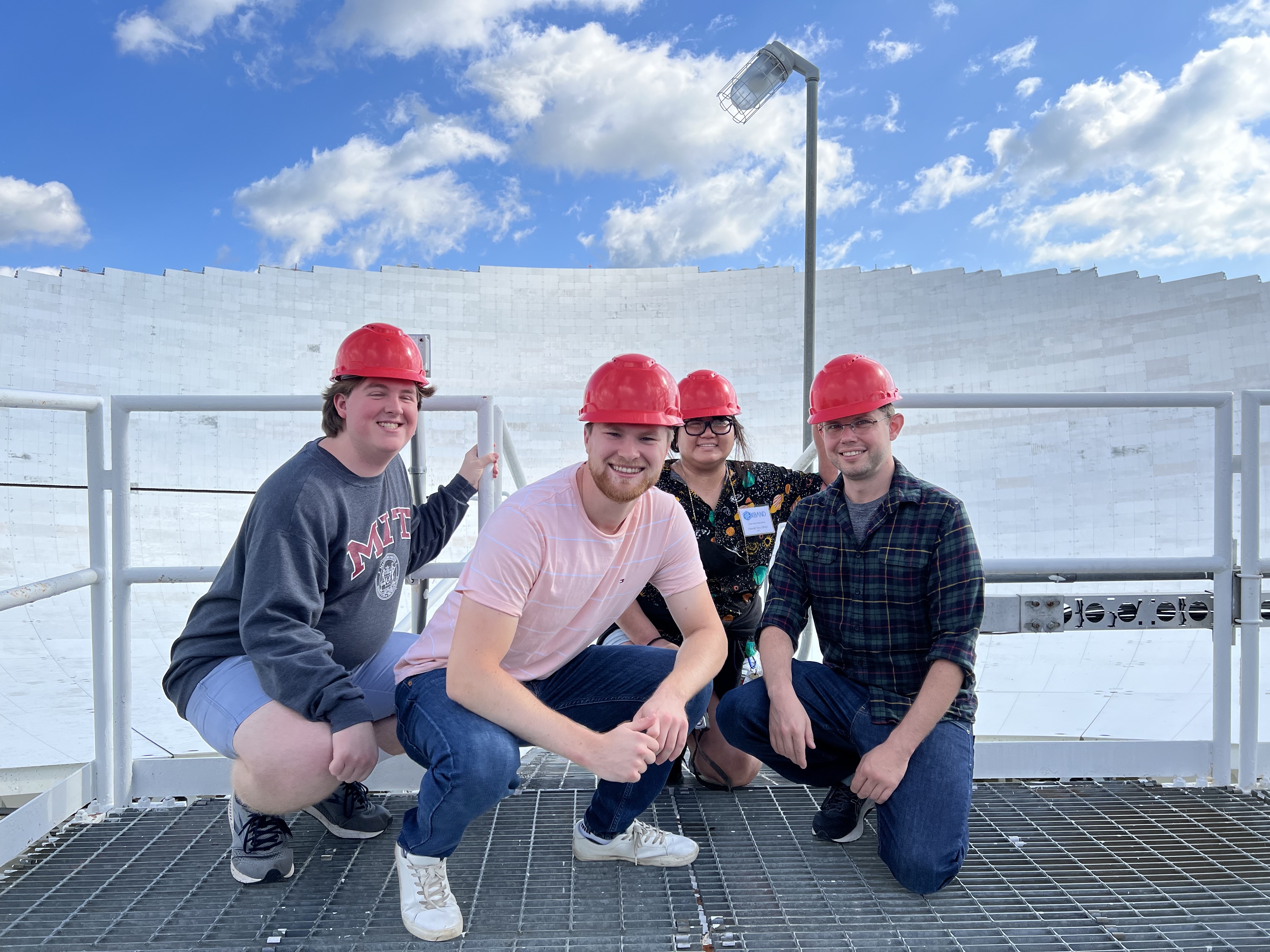
McGuire Group Attends K-Band Science Meeting at the Green Bank Observatory
Brett, Ceci, Alex, Hannah, and Zach traveled to Green Bank to discuss the science being conducted in the K-Band range of frequencies with the Green Bank Telescope. Brett provided a talk regarding the use of the K-Band for astrochemistry.
Hannah is Awarded MathWorks Science Fellowship
This graduate fellowship provides support to graduate students within the MIT School of Science with a preference for students who are active users of MATLAB and/or Simulink. Congratulations, Hannah!

Ceci Wins the Robert Brown Outstanding Dissertation Award
This award is given each year to a recent recipient of a doctoral degree from any recognized degree granting institution in the United States, and is substantially based on new observational data obtained at any AUI operated facility and considered to be of an exceptionally high scientific standard value and impact within and beyond the area of study. Congratulations, Ceci!
McGuire Group Detects Two New Molecules in Space
The first two papers from McGuire's GOTHAM (GBT Observations of TMC-1: Hunting Aromatic Molecules) Collaboration were published, reporting on an overview of the project and detection of propargyl cyanide (HCCCH2CN) for the first time in the interstellar medium (McGuire et al. 2020) and the first detection of the HC4NC molecule in the interstellar medium (Xue et al. 2020).
McGuire Named to C&EN's 2020 Talented 12 List
McGuire shares the honor with eleven brilliant young chemists (average age: 34). As part of the program, McGuire will give a talk at the C&EN Futures Festival August 25-26, 2020.
Kelvin Presents on Machine Learning in Spectroscopy @ SciPy 2020
Solving Spectroscopic Problems with Pythonic Workflows and Deep Learning
With the advent of next generation radio telescopes and laboratory instrumentation, spectral line surveys are becoming increasingly high resolution and high bandwidth resulting in extremely line-rich spectra, collected in a mere few hours. Chemists, astronomers, and spectroscopists have to analyze spectra containing hundreds of features, often with little prior knowledge about the problem. In this talk, Kelvin discusses the development of PySpecTools, a platform for automating complex spectral analysis by implementing Pythonic workflows and probabilistic deep learning models.